WhatApp's Emoji Adventures: From Non-RGI Flags To Brand Partnerships
For World Emoji Day and the 2026 World Cup finals, WhatsApp partnered with Adidas to update its ⚽ Soccer Ball emoji to match the official "Trionda" ball. While unusual, this isn't WhatsApp's first sponsored redesign, nor is it the first time their emojis have diverged from standard designs.

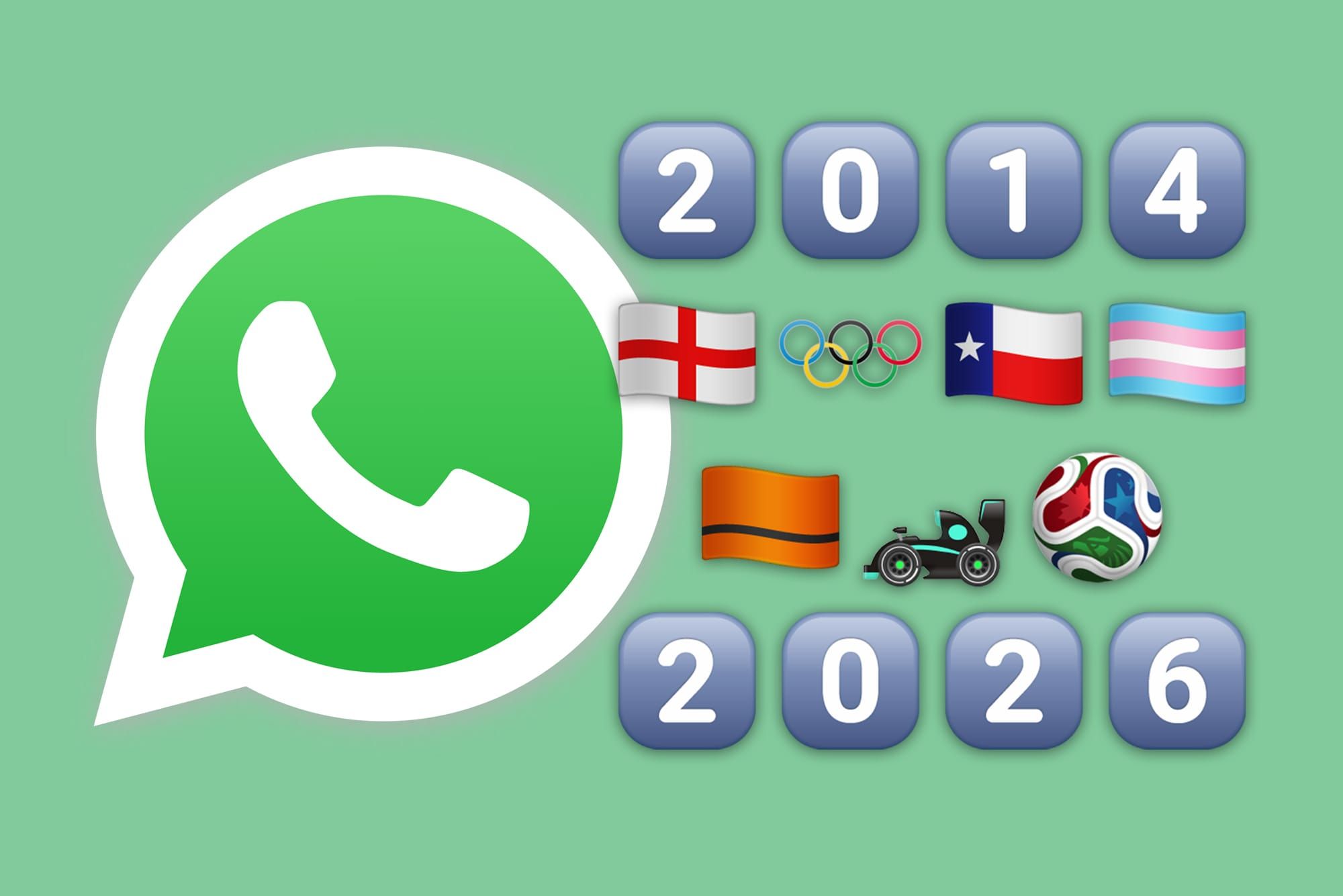
This week marks both World Emoji Day and the final matches of the 2026 FIFA World Cup. Last month, ahead of the tournament's kick-off, WhatsApp announced a partnership with Adidas to update its ⚽ Soccer Ball emoji to match the "Trionda," the tournament's official match ball. While highly unusual in the world of emoji, this is neither WhatsApp's first sponsored emoji redesign nor the first time it has notably diverged from other vendors.
Editor's Note: This article's title references our 2017 post Samsung's Emoji Adventures, as well as a subsection of this 2021 article. It is intended as a companion piece to our A Timeline of Twemoji: 2014 - 2025 article published for World Emoji Day 2025.
Released on June 4, 2026, the ⚽ Soccer Ball emoji was updated not only across WhatsApp for Android and WhatsApp Web, but also within the WhatsApp for iOS app.
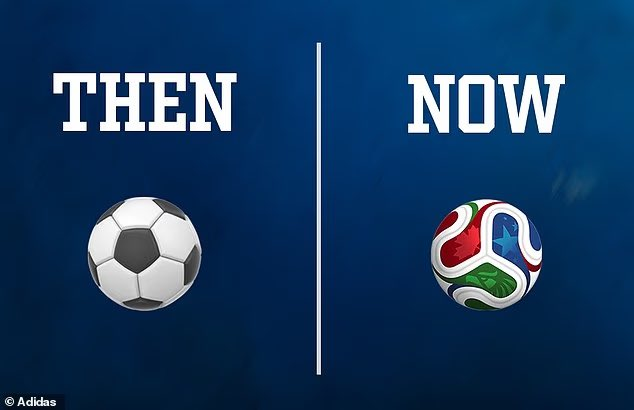
Editor's Note: As of at least July 20 2026, the design for the ⚽ Soccer Ball emoji has been reverted back to its previous design following the end of the FIFA 2026 World Cup.
This is particularly notable because, since introducing its own emoji design set in 2017, WhatsApp has generally continued to rely on Apple's native emoji rendering on iOS while reserving its custom designs for Android and Web.
However, this is not the first time WhatsApp has overridden Apple's default emoji rendering within its iOS app, nor is this WhatsApp's first sponsored emoji redesign.
In April 2024, WhatsApp updated its 🏎️ Racing Car emoji as part of a promotional partnership with the Mercedes-AMG PETRONAS Formula One Team.
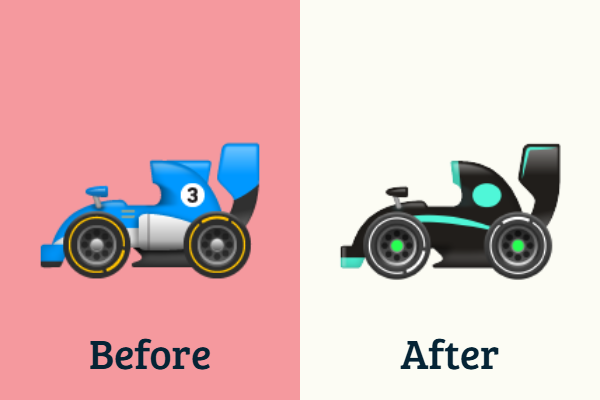
Like the new ⚽ Soccer Ball, that redesign also extended beyond Android to WhatsApp for iOS and Web, where it remains today.
Branded, campaign-specific emoji redesigns are effectively unheard of elsewhere in the emoji world, as they arguably run counter to one of the principles underpinning Unicode's emoji recommendations: that emoji should remain broadly applicable rather than tied to specific commercial entities or events.
For WhatsApp, however, these two brand partnerships are simply the latest examples of a much longer history of doing things differently from other emoji vendors: a history stretching back more than a decade.
2009-2016: The Apple Emoji Set & Beyond
For almost a decade after launching its messaging app in 2009, WhatsApp relied entirely on Apple's emoji designs across both iOS and Android.
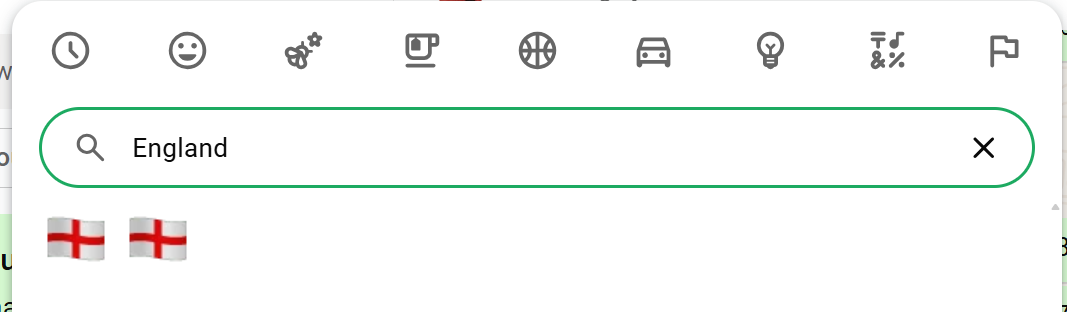
Its first significant departure came in 2014, when WhatsApp added support for the 🏴 Flag for England emoji nearly three years before Unicode formally recommended the emoji as part of Emoji 5.0 in March 2017.

WhatsApp achieved this using a regional indicator pair - the same mechanism behind standard country flags such as 🇬🇧 Flag: United Kingdom - but paired the reserved regional indicator letter X with E, since "XE" was not assigned as an ISO country code.
When Unicode later standardised the 🏴 Flag for England, it adopted an entirely different approach.
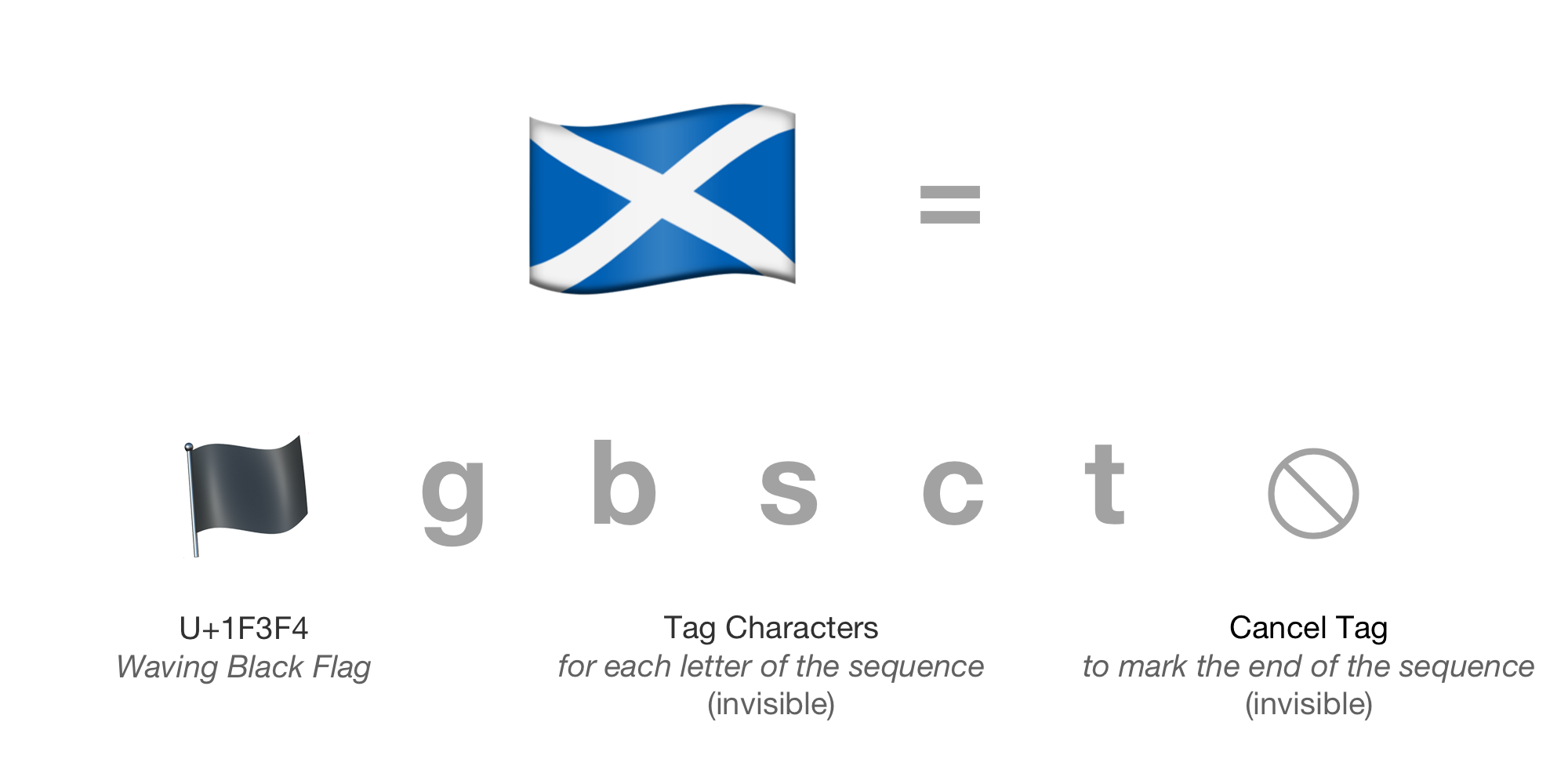
Rather than using regional indicators, the emoji is formed from the 🏴 Black Flag followed by invisible tag characters representing the subdivision code gbeng, before being closed with a terminating tag character. Although the two approaches are technically unrelated, both continue to function within WhatsApp today.
Additionally, in 2015, WhatsApp became the first major vendor to support the 🖕 Middle Finger emoji.
Although approved as part of Unicode 7.0 in 2014, many vendors delayed implementing the character. Apple, for example, did not add support until iOS 9.1 later in 2015. So in effect, WhatsApp enabled many iPhone users to send the 🖕 Middle Finger emoji before Apple's own keyboard supported it.
While the 🏴 Flag for England and 🖕 Middle Finger emoji designs remain active within WhatsApp today, the same cannot be said for WhatsApp's next unique emoji addition.
In July 2016, WhatsApp 2.16.7 introduced a custom Olympic Rings emoji ahead of the Rio Summer Olympics.
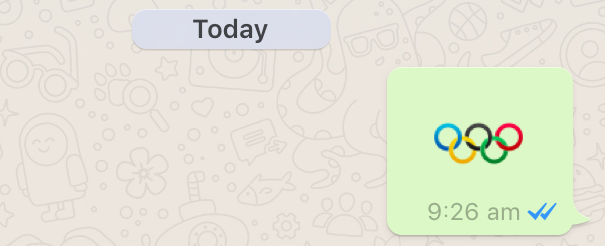
The design was created by joining five instances of the U+25EF Large Circle character with Zero Width Joiners. Outside WhatsApp, the sequence rendered simply as five plain circles. Only within WhatsApp did it appear as the familiar coloured Olympic Rings.
The emoji proved short-lived. Just three weeks later, WhatsApp quietly removed the emoji in version 2.16.9. Neither WhatsApp nor the International Olympic Committee publicly explained the removal, although it is worth noting that the Olympic Rings are a globally registered trademark.
Although the Olympic Rings disappeared almost as quickly as they arrived, WhatsApp's appetite for emoji experimentation did not. Within weeks, WhatsApp added support for the 🏴 Flag for Scotland and 🏴 Flag for Wales, again using reserved regional indicator pairs (XS and XW respectively) rather than waiting for a Unicode recommendation.
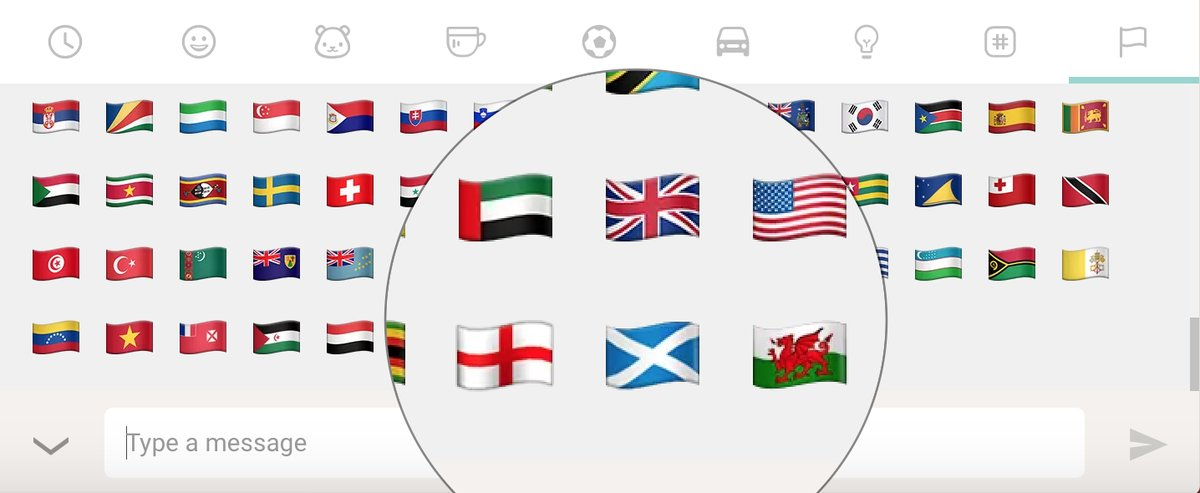
As with England, WhatsApp's original implementations differed completely from the solution Unicode would later adopt.
When all three flags were formally recommended as part of Emoji 5.0, Unicode used black flag tag sequences rather than regional indicators. Nevertheless, both WhatsApp's original implementations and the Unicode-standard versions remain supported within the application today.
WhatsApp continued pushing the boundaries in late 2017 by adding support for the Flag for Texas.
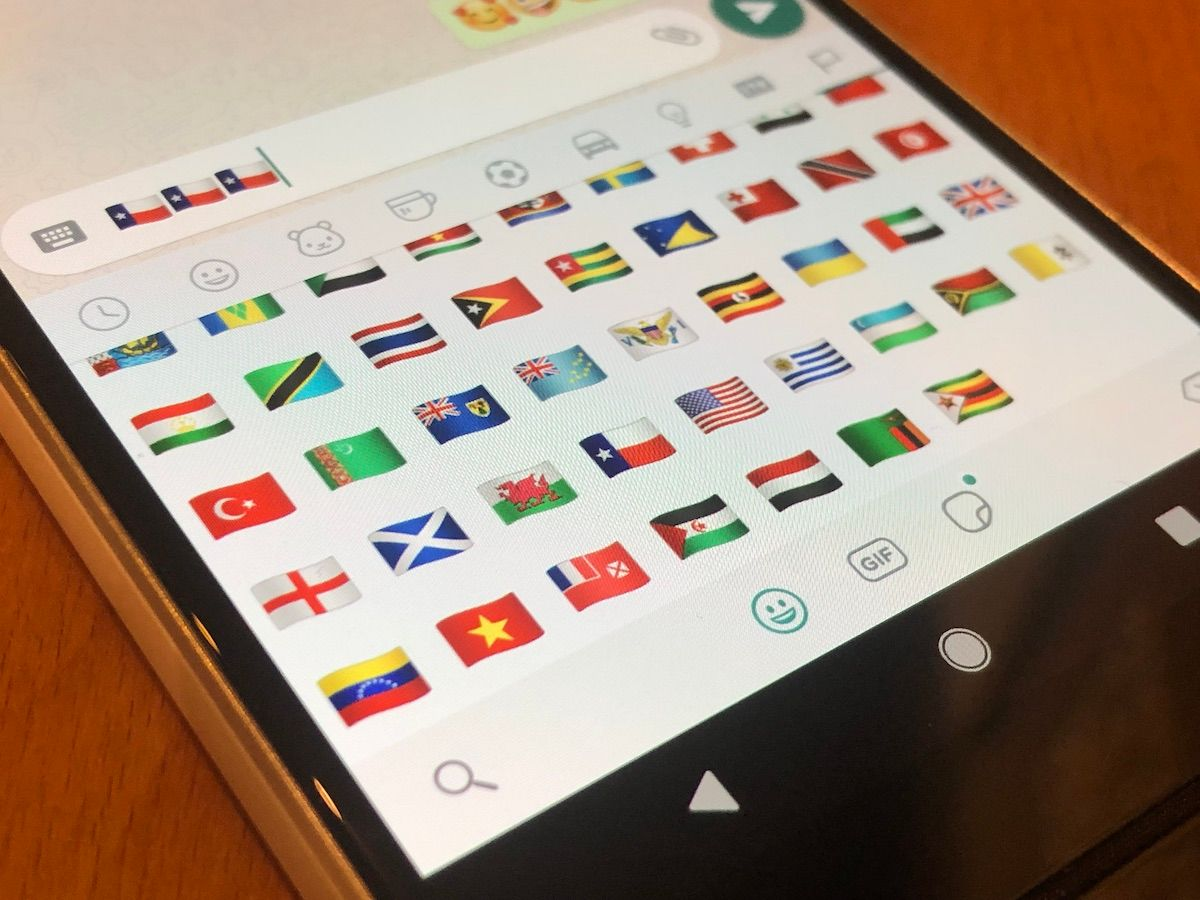
Like the Great Britain subdivision flags, the Texas flag was constructed using a black flag followed by tag characters representing the subdivision code us-tx.
Technically, Unicode allows any ISO 3166-2 subdivision code to be represented using this mechanism. However, only a small number are Recommended for General Interchange (RGI), signalling that vendors should support them consistently.
Texas has never received RGI status, making WhatsApp's implementation entirely its own (the open-source OpenMoji and Catrinity projects have both created their own Texas flag designs since WhatsApp's was introduced).
2017-2024: Creating Their Own Set With Added Extras
Apple's emoji are, of course, copyrighted, and 2017 saw the company begin enforcing App Store policies restricting third-party use of its artwork outside Apple platforms.
At the time, we here at Emojipedia noted that WhatsApp's decision to develop its own emoji set in 2017 (alongside a similar move by Slack) may have been a response to those policy changes:
"WhatsApp used Apple emojis on Android for years, and only recently created its own emoji set for use on Android and the web. Slack, too, offered Apple emojis on all platforms until today. Whether these changes were due to pressure from Apple, or a growing realisation that this might not be the right way to go about cross-platform use, we don't know for sure."
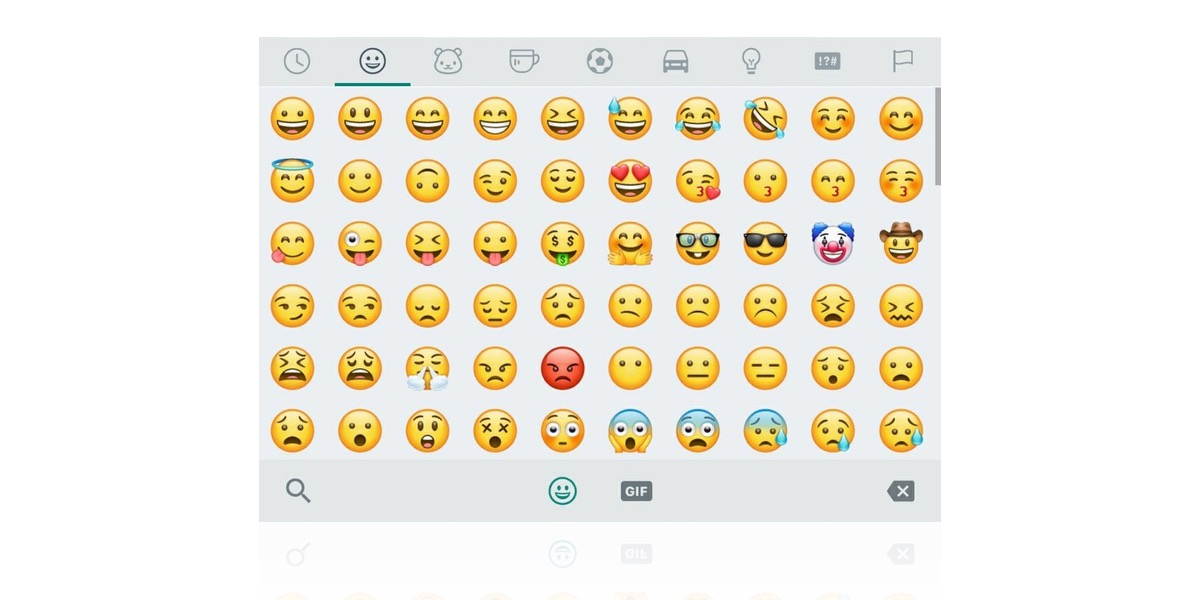
Neither Apple nor WhatsApp has ever confirmed this publicly, so the reasoning remains a matter of informed speculation rather than established fact. Whatever the motivation, however, the result marked a turning point: rather than relying on Apple's artwork, WhatsApp began building and maintaining a complete emoji design set of its own.
Notably, Telegram and Signal both continue to distribute Apple's emoji designs on Android, with Telegram even creating animated versions of a subset of Apple emoji designs within its Android app.
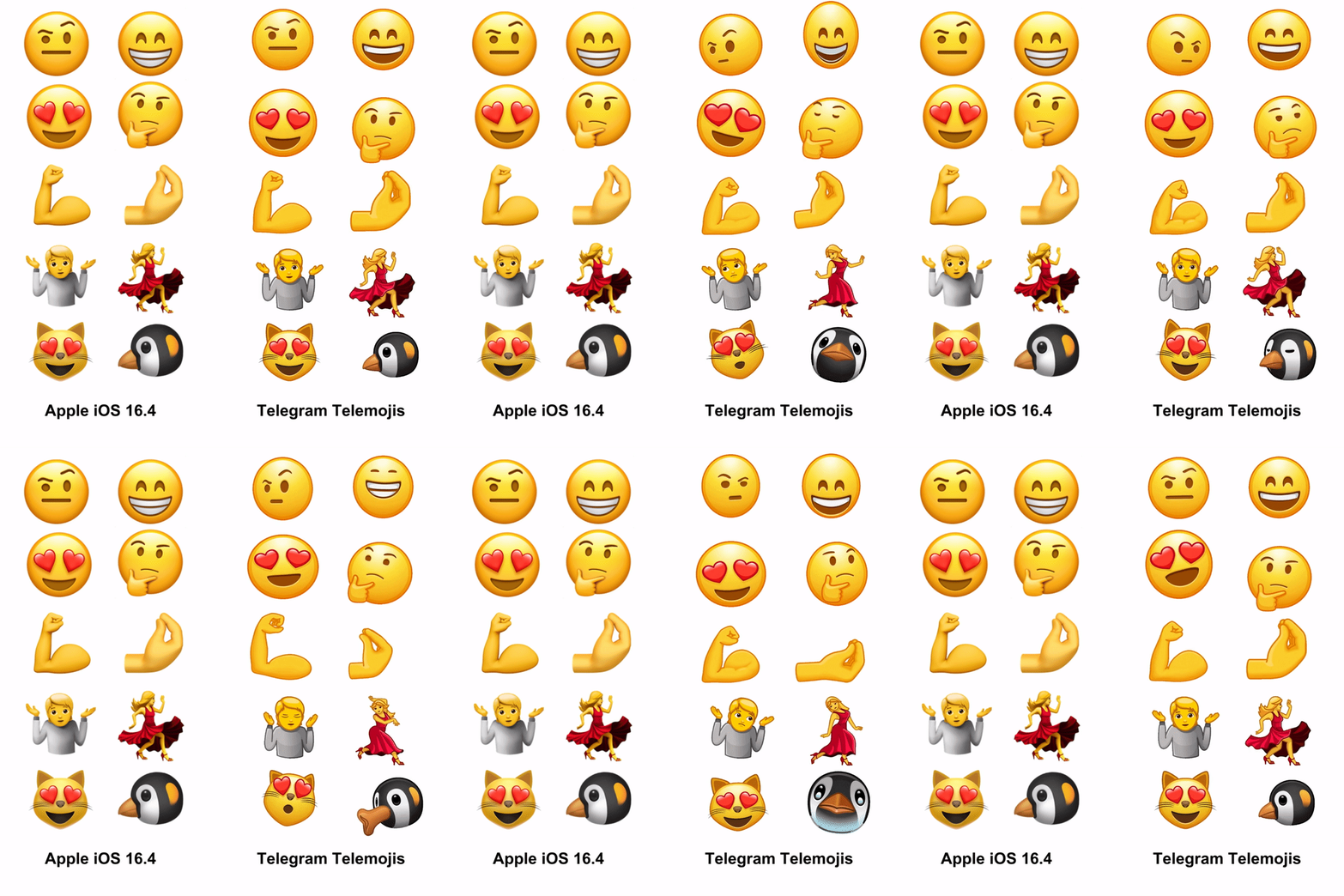
WhatsApp's own new emoji set arrived in beta version 2.17.363 in October 2017, followed by a stable Android release later that month in version 2.17.386.
Rather than reinventing emoji from scratch, WhatsApp adopted an approach that was clearly inspired by Apple's existing designs while remaining visually distinct. This "inspired by, not identical to" philosophy proved surprisingly prescient.
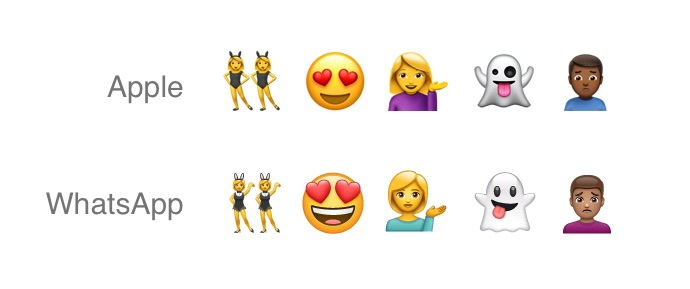
As we noted in our January 2026 review of emoji design convergence, the industry's overall direction since 2018 has been toward Apple's visual language, even among vendors under no obligation to follow it.
WhatsApp's own set arrived at that convergence years earlier, likely for legal rather than artistic reasons, yet ultimately reached many of the same design conclusions.
In any case, WhatsApp's willingness to move ahead of Unicode continued well after the launch of its own emoji design set.
In March 2019, WhatsApp 2.19.62 quietly became the first platform to support the 🏳️⚧️ Transgender Flag emoji, while also giving emoji presentation to the ⚧️ Transgender Symbol for the first time.
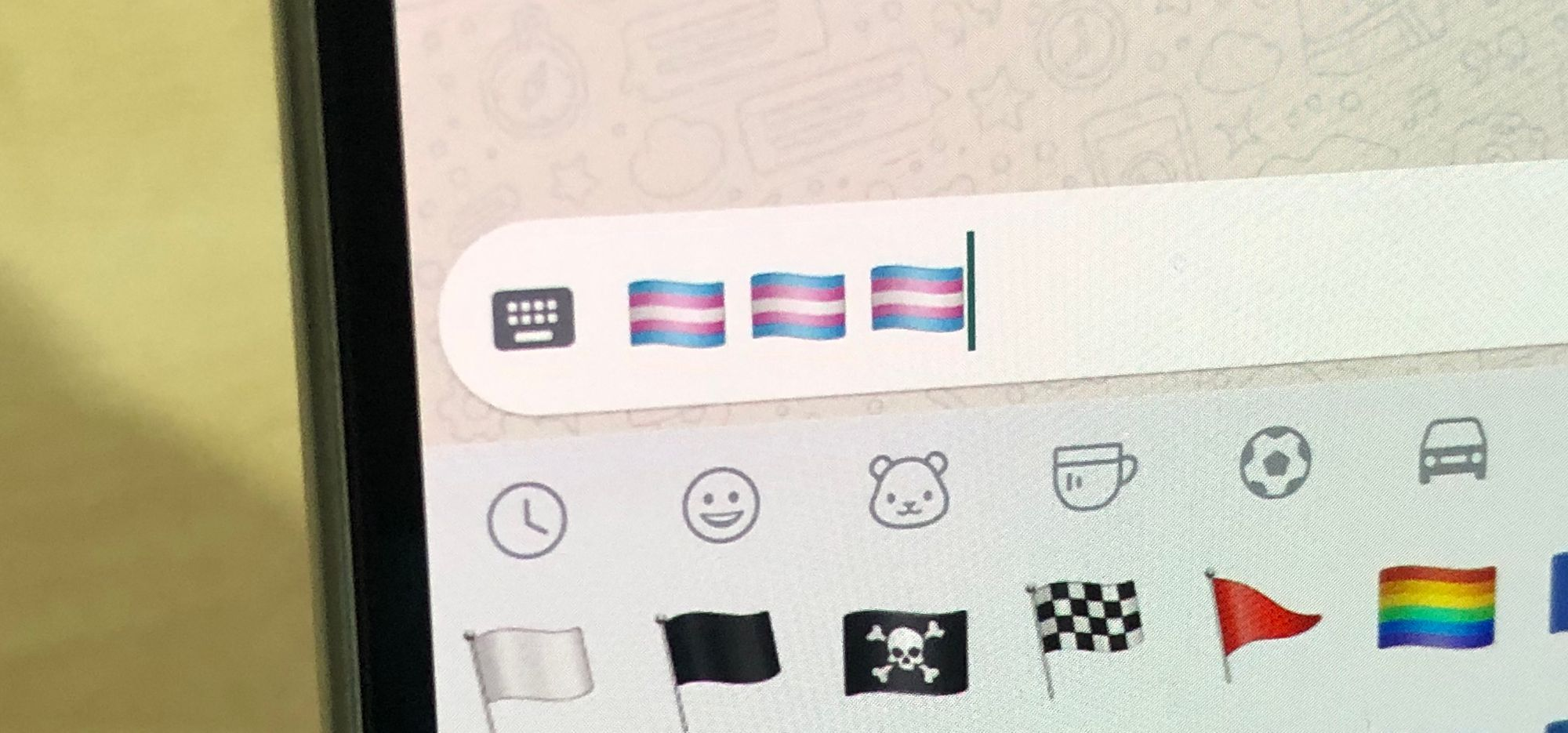
Unlike the three subdivision flags for Great Britain, however, 🏳️⚧️ Transgender Flag was a draft candidate at the time of its introduction by WhatsApp and subsequently Twitter.
Also unlike the subdivision flags, where WhatsApp's early implementations differed entirely from Unicode's eventual solution, the 🏳️⚧️ Transgender Flag followed exactly the same sequence later standardised as part of Emoji 13.0 in 2020: 🏳️ White Flag joined to ⚧️ Transgender Symbol using a Zero Width Joiner.
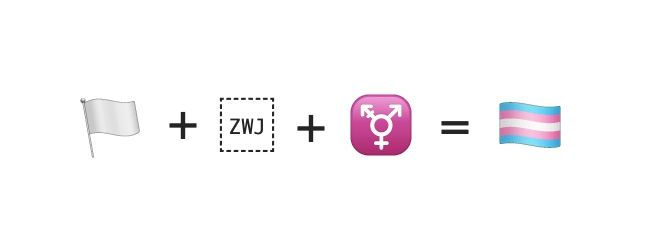
WhatsApp therefore did more than simply anticipate the emoji's approval: it implemented precisely the same character sequence that Unicode would later recommend.
Two years later, in June 2021, WhatsApp 2.21.11.17 introduced the Refugee Nation Flag, based on a 2015 proposal for a nation representing the world's displaced people.
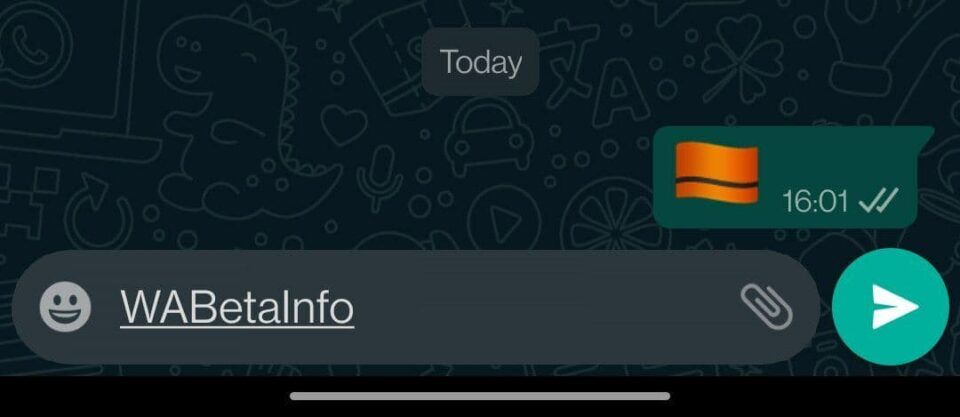
Designed by Syrian refugee Yara Said, the flag was originally created for the Refugee Olympic Team ahead of the Rio 2016 Games, although the International Olympic Committee ultimately declined to adopt it officially.
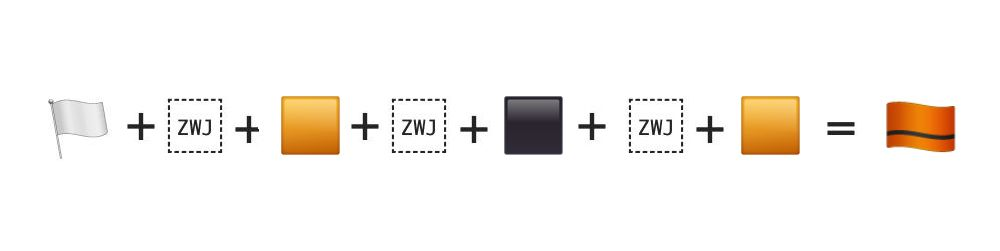
The emoji itself combines 🏳️ White Flag with 🟧 Orange Square, ⬛ Black Large Square, and a second 🟧 Orange Square using Zero Width Joiners. Like the Refugee Nation Flag itself, the sequence has never been recommended for general interchange by Unicode and remains unique to WhatsApp.
Subsequent releases settled into a steadier rhythm of implementing Unicode's annual emoji recommendations while continuing to refine existing designs and occasionally extending support ahead of the standard.
For example, WhatsApp 2.21.16.20, released in August 2021, introduced partial support for Emoji 13.1, including the new smiley and heart designs. However, support did not initially extend to the 🧔♂️ Man: Beard emoji or its skin tone variants, nor to the roughly 200 new skin tone combinations for 💏 Kiss and 💑 Couple with Heart.
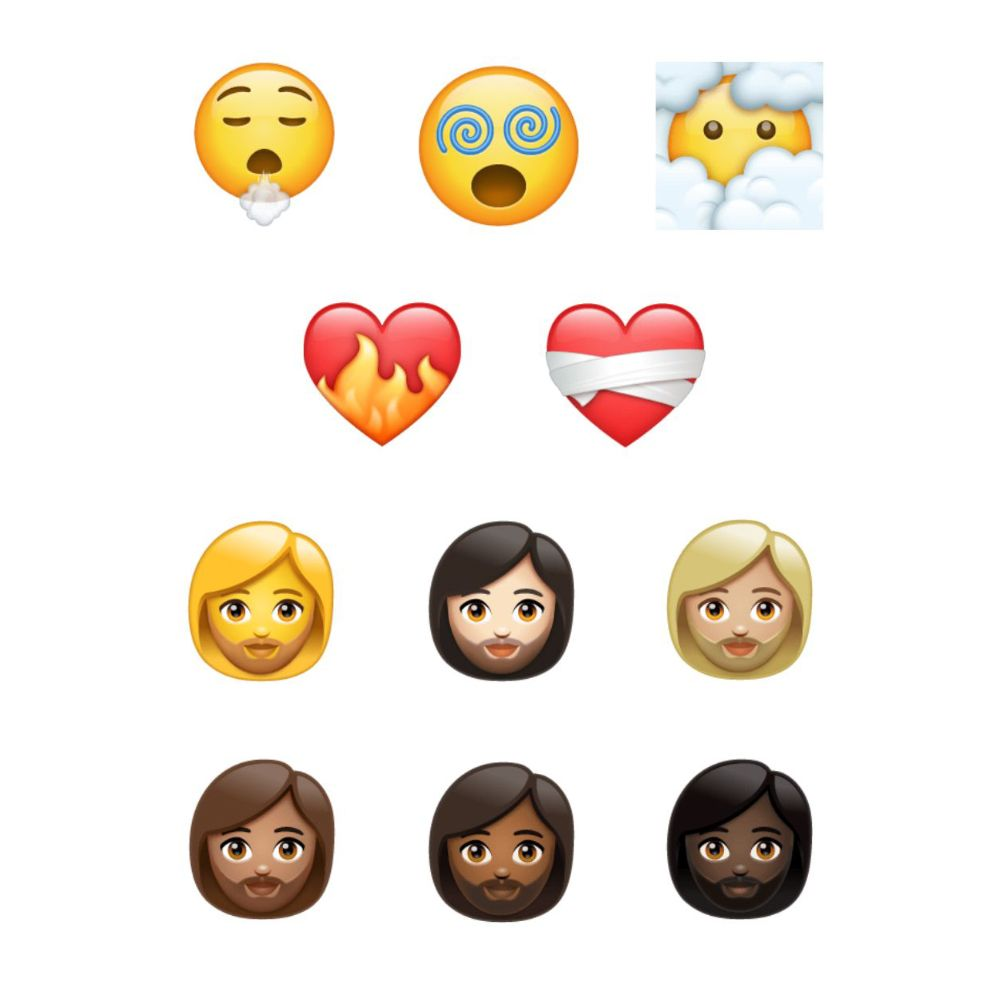
Most of those omissions were addressed a few months later in WhatsApp 2.21.23.23, released in November 2021, although 🧔♂️ Man: Beard itself still rendered as its component characters.
WhatsApp 2.24.2.76, released in February 2024, introduced a subset of Emoji 15.1 alongside a broader series of gender-neutral redesigns for existing people emojis.
2024 Onwards: Still Doing Things A Little Differently
For much of the past decade, WhatsApp has largely kept pace with Unicode's annual emoji recommendations: WhatsApp 2.25.1.75, for instance, brought full support for 2024's Emoji 16.0 within weeks of the standard's release, and WhatsApp 2.26.8.72 added support for 2025's Emoji 17.0 within a day of Apple's own iOS 26.4 rollout.
However, more than a decade on from that first deviation from the norm with the Flag for England addition in 2014, it's clear the platform still shows the same willingness to chart its own course.
While the Adidas ⚽ Soccer Ball and Mercedes 🏎️ Racing Car sit apart from everything else covered in this piece, in that they are redesigns of existing, well-established emoji long recommended by Unicode, rather than new sequences unique to WhatsApp (as with the Flag for Texas, the Refugee Nation Flag, and the early workarounds for England, Scotland, and Wales), they're best understood as just the latest expression of the same independent streak.
Taken individually, each of these decisions (flags added years ahead of Unicode, a trademarked symbol added and then removed, a football reskinned for a tournament sponsor) might look like a curiosity in isolation.
Together, however, they reveal a remarkably consistent philosophy, and the Adidas partnership marks simply the latest chapter in that long history of doing things differently. Few other emoji vendors have been willing to take that approach, and that willingness to experiment remains one of the defining characteristics of WhatsApp's emoji design history.